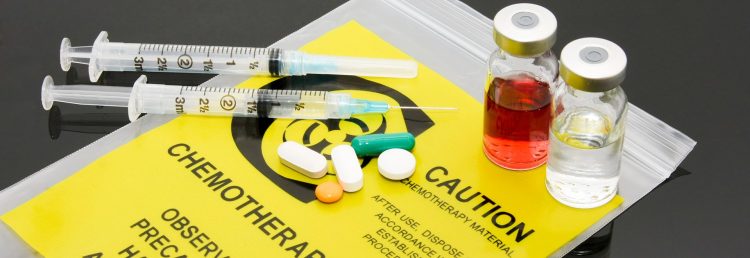
A landmark study reveals that three-quarters of nurses have experienced chemotherapy leaks, while training and workplace stress assessments remain only partially implemented.
Berlin, Germany, 2nd March: Three-quarters of German nursing staff working in oncology are regularly exposed to chemotherapy drugs known as Hazardous Medicinal Products (HMPs), according to a study presented at the German Cancer Congress[1], published in the Springer Pflege Nursing Journal[2], and in available in the Global Journal of Medical Therapeutics3.
The study, conducted by the Konferenz Onkologischer Kranken- und Kinderpflege (KOK) in collaboration with the European Biosafety Network (EBN), shows that nurses who perform life-saving treatments for cancer patients are repeatedly exposed to the drugs they administer, putting their own health at risk.
Key findings from the survey include:
- Around 38% of respondents reported receiving cytostatic drugs that were not connected to an infusion system and had to be manually spiked or connected at the patient’s bedside. This procedure significantly increases the risk of leakage and aerosol formation.
- More than 75% reported fluid leakage during administration. In 11% of cases, this occurred occasionally to frequently.
- Although TRGS 525 expressly stipulates regular training for employees in the handling of hazardous substances, the survey reveals significant deviations from this requirement.
- A quarter (25.1 per cent) of respondents stated that they did not receive refresher training at their workplace, while a further 14.2 per cent were unsure whether such training was even offered.
- In addition, over 40 per cent of nursing staff stated that they were not familiar with the current safety guidelines. Worryingly, fewer than one in five nurses have access to closed-systems, mandated by EU law to prevent exposure to hazardous medicinal products (HMPs)[3] .
The first national study since new regulations took effect reveals that hospitals throughout Germany are not providing adequate protection against cytotoxic substances classified by the EU as carcinogenic (cancer-causing), mutagenic (damaging or mutating genetic material) or reprotoxic (harming reproductive functions). Over 1,000 nursing staff were surveyed, and the study found that fluid spills during chemotherapy administration have become the norm, training is inconsistent or non-existent, and health monitoring exists in only 15% of cases.
More than 8% of survey respondents report experiencing symptoms such as skin reactions, headaches, and nausea, which they attribute to handling these drugs. The highest rates were observed among nurses with more than a decade of experience in oncology. These findings underscore the heightened risk of long-term exposure faced by oncology nurses.
Professor Dr. Patrick Jahn, board member of the Konferenz Onkologischer Kranken- und Kinderpflege (KOK), said: “What we’re seeing is a discrepancy between regulative specifications and current practice. Is not just an abstract occupational health issue, this is about protecting the nursing workforce. Beside the administration of closed-systems we have to close very basic gaps; bedside spiking must be consistently prevented; training requirements must be binding and verifiable and hospitals must implement systematic monitoring for exposure risks.”
Dr Paul Sessink, PhD, Founder and Managing Director of Exposure Control Sweden AB, says: “The results of the survey are astonishing but not unexpected. German oncology pharmacists have pretended for many years that handling hazardous drugs is under (their) control but the results show the opposite in many situations. As long as they refuse to implement CSTDs [closed-system transfer devices], the whole lifecycle from compounding, administration and waste handling will not be under control. Contamination during compounding will be transferred from prepared products such as syringes, and infusion bags and pumps, to the administration areas exposing nurses to the hazardous drugs. The implementation of CSTDs is a must to achieve closed handling along the lifecycle to enable full protection of the nurses. Many studies have shown a substantial reduction in surface contamination with hazardous drugs after implementation of a CSTD consequently minimising the potential risk of exposure. In addition, continuous training and education, and the use of effective Personal Protective Equipment (PPE) remains necessary to protect the nurses.”
Josh Cobb, Secretary of the European Biosafety Network, says: “This German study reflects a crisis playing out across Europe. Up to 12.7 million healthcare and other workers in the European Union are potentially exposed to hazardous medicinal products at work, according to estimates by the European Trade Union Institute. What makes this particularly alarming is that many healthcare workers, especially nurses, simply don’t know that the drugs they handle every day are classified as hazardous and can cause serious harm to their health. There’s a fundamental gap in education and awareness. These professionals dedicate their lives to caring for cancer patients, yet they’re unknowingly putting their own fertility, genetic health, and long-term wellbeing at risk. We need urgent action from health authorities across Europe to close the gap between legislation and practice, through proper training, monitoring, and access to the closed-system technology, including Closed-System-Transfer-Devices (CSTDs), that EU law already requires.”
The study found that 83% of nurses experience leaks from infusion systems at least occasionally, yet only 19% use closed-system transfer devices (CSTDs) that mechanically seal hazardous drugs during administration. The EU’s Carcinogens, Mutagens and Reprotoxic Substances Directive (EU CMRD 2022/431) explicitly required hospitals to implement such systems by April 2024. Germany transposed the directive into national law on schedule, but enforcement has been absent.
The consequences extend beyond immediate health effects. Two-thirds of hospitals conduct no medical surveillance of exposed staff, meaning long-term harm including cancer or reproductive damage may go undetected until it’s too late. Just 15% of workplaces perform surface contamination testing and only 2% conduct biological monitoring through urine analysis, both considered essential for verifying that safety protocols actually work.
Training failures compound the risk. One quarter of nurses receive no refresher instruction on handling cytotoxic agents, while over 40% say they’re unfamiliar with current safety guidelines or unsure whether their workplace even maintains an official list of hazardous substances. Experienced staff appear particularly disconnected from updated protocols: nearly one-third of nurses over 50 couldn’t confirm whether such a list exists at their facility, compared to less than 10% of those under 30.
The facility management is primarily responsible for implementing occupational health and safety requirements, but the study suggests that many are either unaware of the requirements or unwilling to invest in the necessary equipment and training. In the future, closed system transfer devices (CSTDs) could play a key role in the safe handling of cytotoxic substances. However, as they are more costly than conventional infusion systems, their wider adoption will require clear regulatory standards and robust inspection frameworks.
The demographic profile of the workforce makes the findings especially troubling. Over 82% of survey respondents were female, and more than half had handled these drugs for over a decade. The study also documented exposure among newly qualified nurses with less than one year of experience, despite guidance that they should not be administering cytotoxic drugs at all.
The KOK, in cooperation with the EBN, is now calling for increased monitoring rates including workspace inspections, transparency regarding compliance rates, and action when employers fail to meet safety standards. Modern tumour therapeutics are often very expensive, but no corners should be cut when it comes to employee protection for the safe administration of substances, e.g. through CSTDs.
The survey was conducted online between March and May 2025 and included 1,012 specialist oncology nurses from hospitals and outpatient clinics throughout Germany. The study was conducted using the SoSci survey tool.
The full study, “Occupational Safety in Oncology Nursing: Findings from a National Survey on the Handling of Cytotoxic Substances in Germany” by Cobb, Jahn and Frémond, is available in the Global Journal of Medical Therapeutics:
https://doi.org/10.46982/gjmt.2025.103
– ENDS –
[1] https://dkk.conference2web.com/#!contentsessions/115435
2 Cobb, J., Jahn, P. Arbeitsschutz zwischen Regulierung und Praxis. Springer Pflege, Zeitschrift Pflegewissenschaft79, 50–53 (2026). https://doi.org/10.1007/s41906-026-3005-4
3 Cobb, J., Jahn, P., Frémond, L, Global Journal of Medical Therapeutics, Year: 2025, Volume: 7, Issue: 4, Pages 1-6, Occupational Safety in Oncology Nursing: Findings from a National Survey on the Handling of Cytotoxic Substances in German: https://doi.org/10.46982/gjmt.2025.103
4 (Bestätigung, dass zytotoxische Substanzen, die CMR-Stoffe der Kategorie 1A oder 1B enthalten, in den Anwendungsbereich der Richtlinie 2004/37/EG fallen.) Richtlinie (EU) 2022/431 des Europäischen Parlaments und des Rates vom 9. März 2022 zur Änderung der Richtlinie 2004/37/EG über den Schutz der Arbeitnehmer vor der Gefährdung durch Karzinogene oder Mutagene bei der Arbeit. Amtsblatt der Europäischen Union, L 88, 16. März 2022, S. 1–8.
[1] https://dkk.conference2web.com/#!contentsessions/115435
[2] Cobb, J., Jahn, P. Arbeitsschutz zwischen Regulierung und Praxis. Springer Pflege, Zeitschrift Pflegewissenschaft79, 50–53 (2026). https://doi.org/10.1007/s41906-026-3005-4
[3] (Bestätigung, dass zytotoxische Substanzen, die CMR-Stoffe der Kategorie 1A oder 1B enthalten, in den Anwendungsbereich der Richtlinie 2004/37/EG fallen.) Richtlinie (EU) 2022/431 des Europäischen Parlaments und des Rates vom 9. März 2022 zur Änderung der Richtlinie 2004/37/EG über den Schutz der Arbeitnehmer vor der Gefährdung durch Karzinogene oder Mutagene bei der Arbeit. Amtsblatt der Europäischen Union, L 88, 16. März 2022, S. 1–8.


